BUILD THE FOUNDATIONS
Make the thinking stronger.
Consolidate key concepts, identify recurring difficulties and develop methods that make sense—not just steps to memorise.

PRIMARY TUITION & LEARNING SUPPORT
Not just the next worksheet.
Academic support that grows with your child.
Explore 1-to-1 tuition, small-group learning and PSLE preparation through three TAIP™ stages: Foundations (P1–P2), Transition (P3–P4) and Readiness (P5–P6).
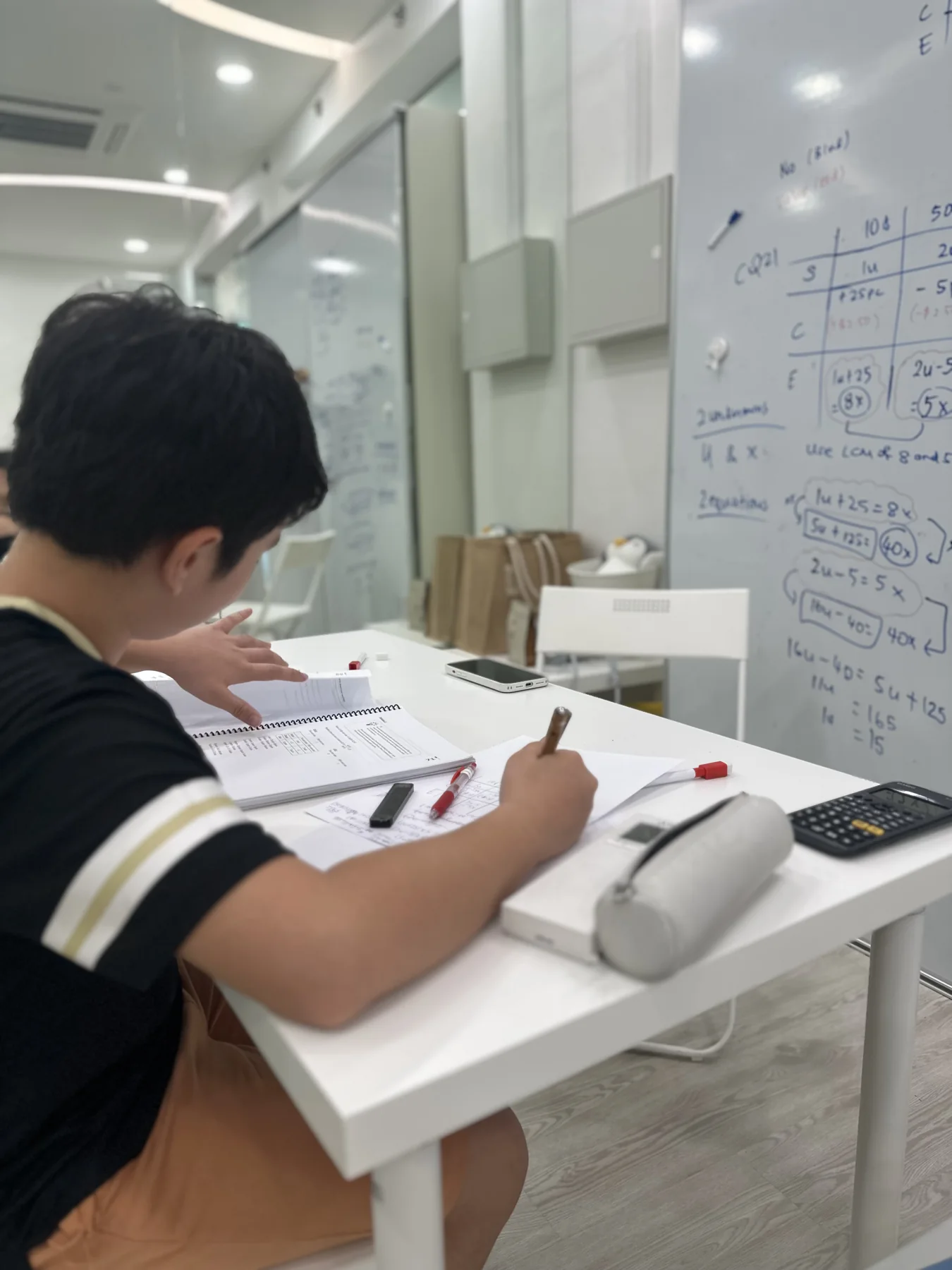 THE LEARNER COMES FIRST
DIFFERENT NEEDS. THOUGHTFUL PATHWAYS.
Some children need a concept explained differently. Some need a more focused challenge. Across P1–P6, we shape support through TAIP™ Foundations, Transition and Readiness.
A dedicated educator. A pace and focus shaped around one learner.
Explore individual support 02 / CONNECTEDSpace to ask, explain and learn together, with an attentive teacher.
Register your interest 03 / PREPAREDConcepts, strategies and revision habits for the upper-primary years.
Explore P5–P6 support 04 / SUPPORTEDTargeted educational support when the usual approach is not enough.
Discuss learning needsFind a starting point for a conversation.
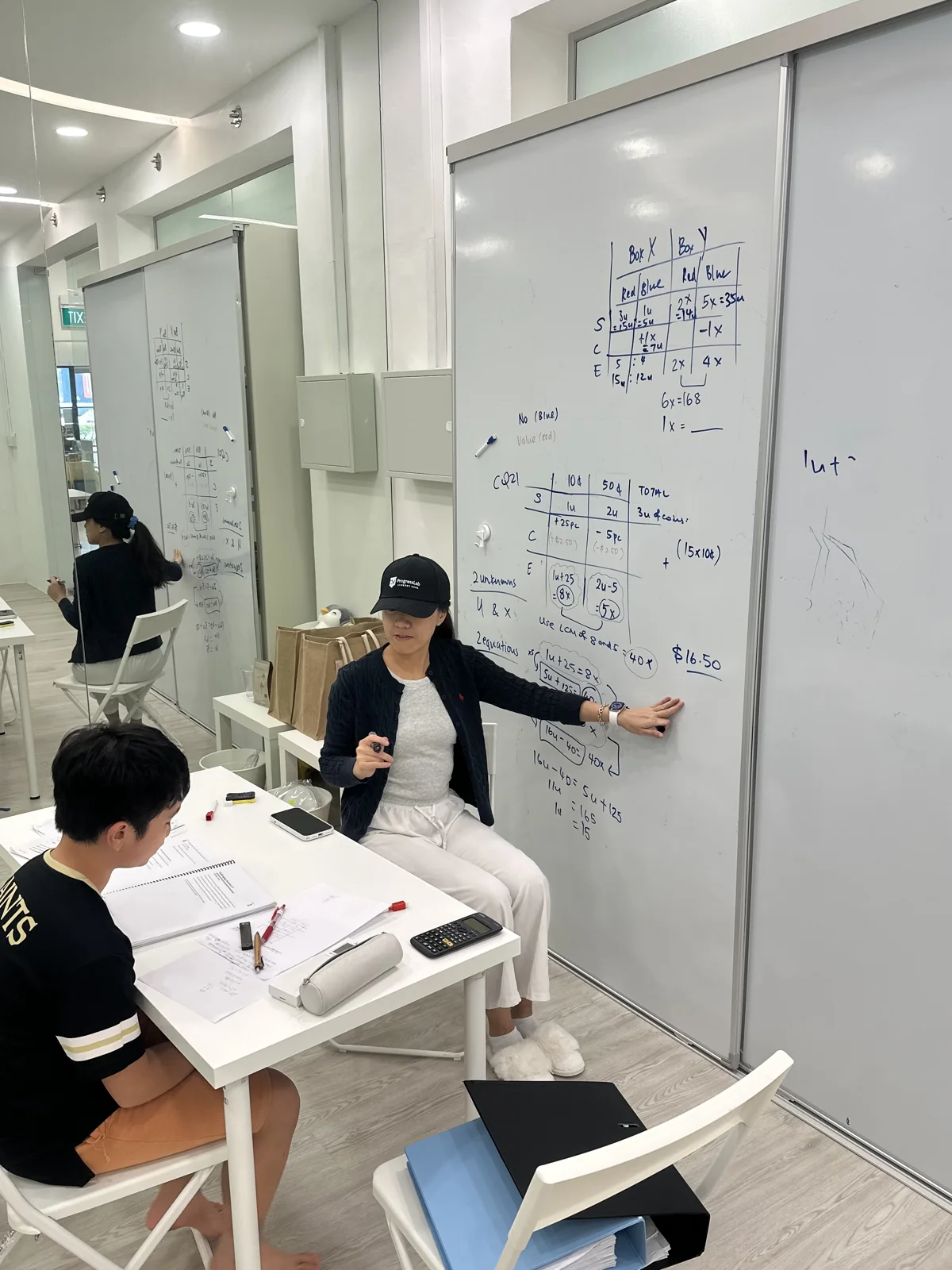
01 / 1-TO-1 PRIVATE TUITION
Focused teaching for the questions, concepts and habits your child needs to work on. We discuss the starting point, then match the subject and support to the learner.
Number sense, core concepts, word problems and explaining a method clearly. Guided practice helps reveal which step needs attention.
Reading comprehension, vocabulary, grammar and purposeful writing. The focus is discussed around the learner’s current work and next learning goal.
Reading, vocabulary, comprehension and oral expression, with guided practice at an appropriate level. Specific needs and teacher availability are discussed first.
Core concepts, application and clear explanations. Work through what a question is asking and connect an answer to the scientific ideas behind it.
Subjects, educator, lesson duration and fees are confirmed before enrolment.
02 / SMALL-GROUP ACADEMICS
Learning together should still feel personal. We are gathering interest in focused primary-school groups, organised around level and learning needs.
Group learners thoughtfully, rather than filling a room.
Make room for questions, explanations and guided practice.
Confirm the teacher, group size, schedule and fees before you commit.

Learning is a conversation.
Every child deserves a part in it.
03 / PSLE HEADSTART · P5–P6
The TAIP™ Readiness stage brings together explicit PSLE preparation with continuing Core support, so older learners build confidence, stamina and ownership.
BUILD THE FOUNDATIONS
Consolidate key concepts, identify recurring difficulties and develop methods that make sense—not just steps to memorise.
BRING IT TOGETHER
Prioritise revision, practise applying strategies and work on time use, checking and responding calmly to unfamiliar questions.
04 / LEARNING INTERVENTION
When the same difficulty keeps returning, we look more closely at the skill, the task and the support being offered.
Targeted educational support may involve breaking down instructions, revisiting a foundation or modelling a strategy differently. Suitability is discussed with the family before any plan is agreed.
Talk through your child’s needsSTART WITH UNDERSTANDING
Look at current work and where the learner needs help to begin or continue.
Use manageable steps, guided examples and clear learning routines.
Notice what helped and whether that support can be reduced or adapted.
This is educational support, not diagnosis, therapy or clinical assessment. Where specialist input is needed, we will discuss the limits of our support openly.
05 / THE TAIP™ APPROACH
TAIP™ helps us shape academic support across three stages: Foundations for P1–P2, Transition for P3–P4 and Readiness for P5–P6.
For parents, that means a clearer conversation about what your child is working on now, what support helps, and what a sensible next step looks like.
Foundational learning, confidence and independence
Greater academic independence and application
Explicit PSLE preparation with continuing Core support
Human-led educational observation. Not a diagnostic tool. Reporting arrangements are agreed with your educator.
Fictional example · Not a child’s record
The learner needed the first step modelled before attempting a word problem.
A simple bar model and one instruction at a time.
Review whether the learner can start a similar question with less prompting.
Fictional example · Not a child’s record
The learner waited for an adult prompt before starting a short reading task.
A two-step visual routine and modelling the first sentence together.
Review whether the learner can use the visual routine to begin the next task.
Fictional example · Not a child’s record
The learner understood the method but missed a condition in a multi-step question.
Underlining conditions and using a short answer-checking routine.
Review whether the checking routine is used independently in similar work.
Illustrative stage examples across Foundations, Transition and Readiness — not a live dashboard or promised report format.
06 / OUR EDUCATORS
Get to know the educator, not just the programme name. Ask about their teaching background and how they would approach your child’s next step.

THE MATHS CAFÉ
English & Mathematics
15+ years in educationEXPERIENCE WITH A PERSONAL APPROACH
Ms Joyce taught English and Mathematics at The Learning Lab and previously served as Head Teacher at Nanyang Education.
As founder of The Maths Café, she brings more than 15 years of educational experience to personalised coaching for local and international learners.
Teaching arrangements and availability are confirmed individually.
THE PROGRESSLAB SETTING
Academics sits within the wider ProgressLab family, with tuition appointments planned around the centre’s after-school care day.
Tuition appointments
Subject to educator availability
Tuition and selected programmes
Ask about available times
07 / BOOK AN ACADEMIC CONSULTATION
Tell us a little about the support you are exploring. We will discuss your child’s current stage — Foundations, Transition or Readiness — and the most suitable academic pathway.
Share your starting pointPrimary level, subject and the format you are considering.
Have a thoughtful conversationDiscuss the learning need and whether the support is a fit.
Agree before you commitConfirm the educator, schedule and fees before enrolment.
Prepare an enquiry. Review it. Send it on WhatsApp.
YOUR MESSAGE IS READY TO REVIEW
We have not sent or saved this enquiry.
A LITTLE MORE CLARITY
You can enquire about academic support on its own or alongside student care. Tuition and student-care arrangements are discussed and priced separately; the team will confirm what is available for your family.
Fees depend on the programme, educator, format and lesson duration. We will explain the proposed arrangements and fees before enrolment. Student-care monthly fees are not the tuition fees.
We are collecting expressions of interest. Groups are formed around level, learning needs and educator availability. The team will confirm the class size, start date, timetable and fees before any commitment.
Start with a conversation about the learning support being sought. We will discuss suitability, staffing and the limits of what we can provide. Our academic support is not a substitute for clinical assessment, therapy or specialist services. Please do not send medical documents through the website enquiry form.
TAIP gives educators a structure for recording observations, the strategies they try and what to review. It supports parent conversations and educational planning. It does not diagnose children, guarantee improvement or replace educator judgement. Reporting arrangements are confirmed with the family.
The form prepares a message for you to review and send through WhatsApp. Nothing is submitted automatically. After you send the message, the team can discuss the enquiry and confirm a suitable next step. There is no automatic booking or payment.
From Foundations to Readiness.
The whole child, always in view.